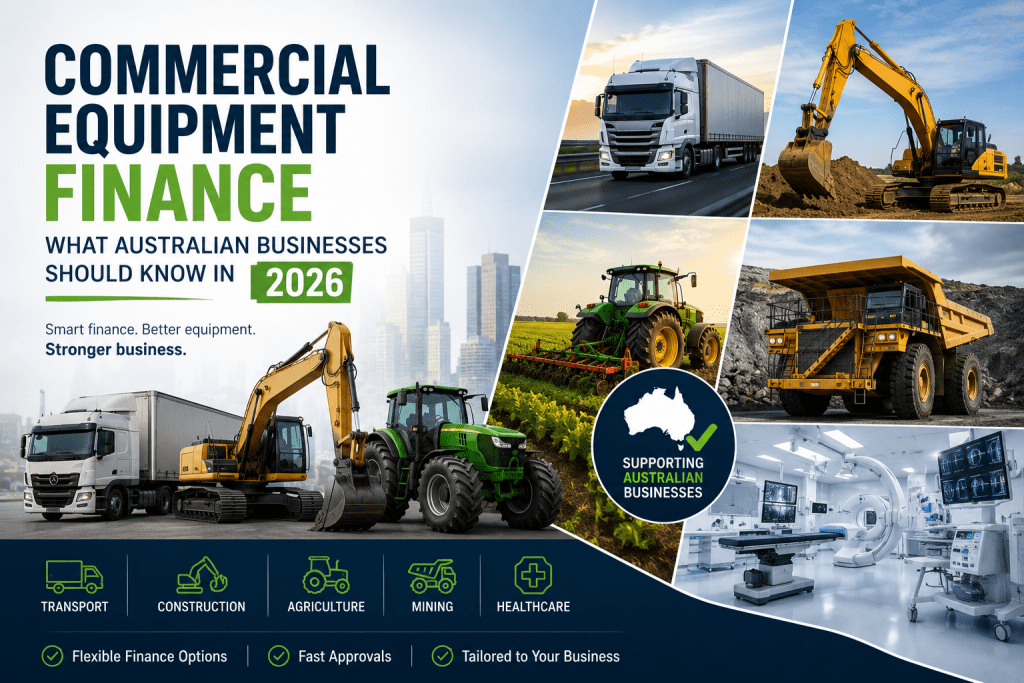
For many Australian businesses, growth depends on having the right equipment at the right time. Whether it’s a new truck, construction machinery, medical equipment, agricultural assets, or upgraded technology, investing in equipment is often essential for improving productivity and remaining competitive.
The challenge is that purchasing equipment outright can place significant pressure on cash flow and reduce the funds available for day-to-day operations.
This is where commercial equipment finance can make a real difference.
At BTE Finance, we help businesses across Australia access the equipment they need while preserving working capital and maintaining financial flexibility.
Why equipment finance remains important in 2026
With operating costs continuing to rise across many industries, businesses are increasingly focused on managing cash flow while still investing in growth opportunities.
Commercial equipment finance allows businesses to acquire essential assets without paying the full purchase price upfront. Instead, repayments are spread over an agreed term, helping businesses maintain liquidity and better manage their finances.
This approach can provide several benefits:
- Preserve cash flow for operational expenses
- Maintain working capital for growth opportunities
- Upgrade equipment sooner rather than delaying investment
- Improve productivity and operational efficiency
- Access modern technology and equipment that may otherwise be out of reach
For many businesses, the ability to invest in higher-quality equipment can lead to improved performance, reduced downtime, and stronger long-term profitability.
What types of equipment can be financed?
Commercial equipment finance can be used for a wide range of business assets, including:
- Trucks and commercial vehicles
- Construction and earthmoving equipment
- Agricultural machinery
- Medical and healthcare equipment
- Manufacturing and industrial machinery
- Technology, IT infrastructure, and office equipment
- Specialist tools and industry-specific assets
If the equipment supports your business operations or contributes to generating revenue, there is often a finance solution available.
Understanding the equipment finance process
The equipment finance process is typically straightforward and can often be completed faster than many business owners expect.
In most cases, the process involves:
- Identifying the equipment your business requires
- Obtaining a supplier quote
- Submitting a finance application
- Assessment and approval by the lender
- Settlement and equipment purchase
- Repayment through structured instalments
Because the asset itself often serves as security for the loan, equipment finance can be an efficient funding solution for many businesses.
Is equipment finance the right choice for your business?
Equipment finance may be worth considering if your business:
- Needs equipment to support expansion or increased demand
- Wants to preserve cash reserves
- Is seeking to improve operational efficiency
- Requires upgraded technology or machinery
- Prefers predictable repayment structures
- Wants to invest in growth without impacting day-to-day cash flow
Every business has different objectives, which is why choosing the right finance structure is just as important as selecting the right equipment.
Partner with BTE Finance
At BTE Finance, we understand that every business is different. Our team works closely with business owners to identify finance solutions that align with their operational needs, cash flow requirements, and growth plans.
Whether you’re purchasing a single vehicle, upgrading machinery, or investing in equipment to expand your operations, we can help you explore finance options tailored to your circumstances.
Looking to finance a vehicle or business equipment in 2026?
Speak with the team at BTE Finance today and discover how the right finance solution can help your business invest in growth while maintaining financial flexibility.
Reach out to us today on 0401 480 828 – we’re here to help.
DISCLAIMER: The above content is to provide general information and does not constitute financial, legal or other advice. This means that duties and requirements imposed on people who give financial advice do not apply to this content. For advice contact your accountant or legal advisor.